Do Artificial Flowers Look Fake?
A modern styling guide for faux florals that look real—especially in real spaces
Let’s be honest: when people ask “Do artificial flowers look fake?” they’re not asking for a lecture.
They’re asking one thing:
Will it look believable in my space—or will it look like décor that’s trying too hard?
The good news is this: artificial flowers can look incredibly real.
The bad news is also this: artificial flowers can look incredibly fake.
The difference usually isn’t the word “faux.”
It’s quality + styling + restraint.
Quick answer: Premium artificial florals can look real—especially when they’re designed for eye-level realism and styled with perfectly imperfect variation (the way nature actually looks).
SilkBlume exists for people who want beautiful spaces without maintenance, replacement, or waste—and this guide will show you how to get that look, cleanly.
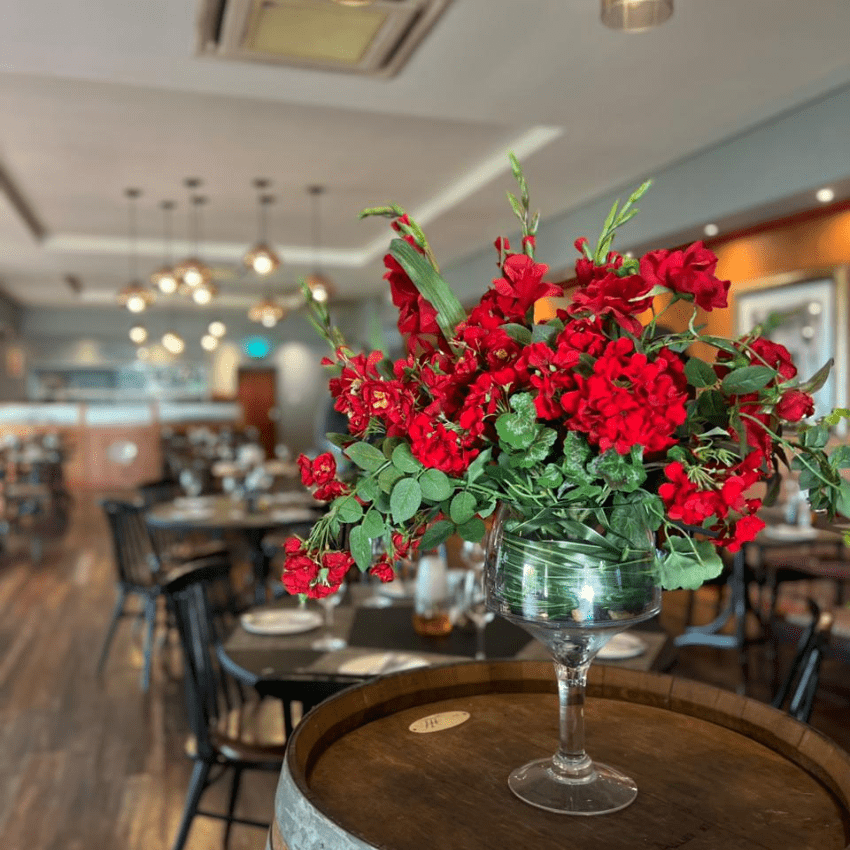
Why do artificial flowers look fake sometimes?
Most “fake-looking” arrangements share the same few issues:
- Too shiny (leaves reflect light like plastic)
- Too uniform (same color, same petal shape, same spacing—nature never does that)
- Too crowded (stuffed vases, no negative space, no air)
- Wrong scale (tiny bouquet in a large space, or a massive display on a small desk)
- Wrong container (a dated vase can make even premium stems feel “off”)
- Wrong placement (awkward corners, busy surfaces, competing décor)
If everything matches perfectly, it reads manufactured.
Real-looking arrangements don’t aim for symmetry—they aim for perfectly imperfect.
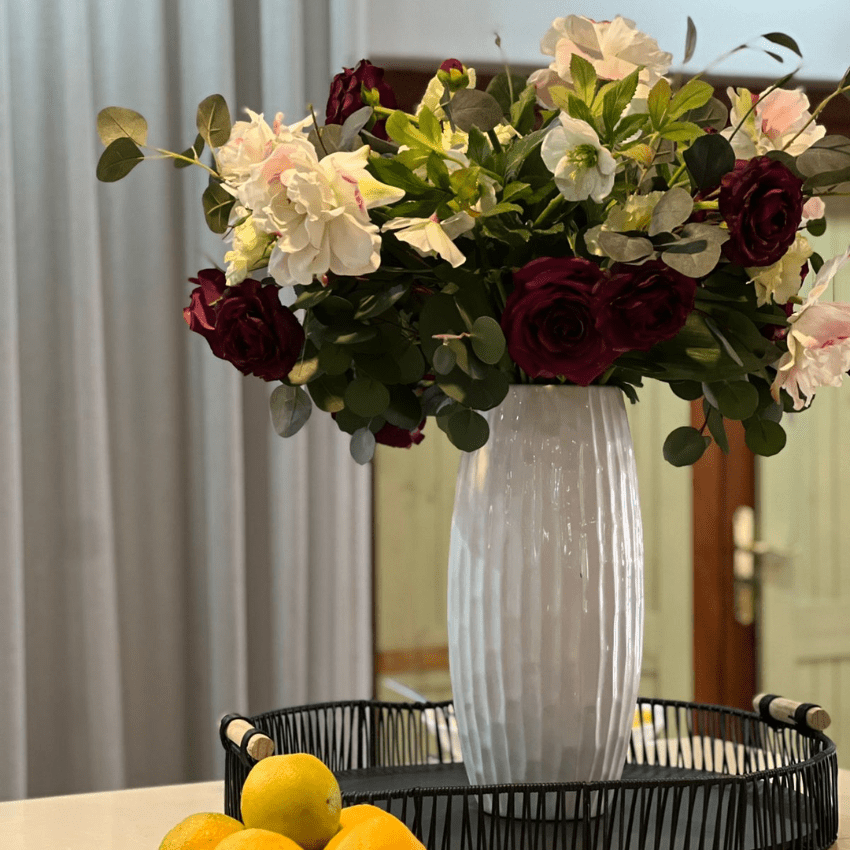
What makes artificial flowers look real?
When artificial flowers look real, it’s usually because they follow a few design principles that mimic nature.
1) Variation: real flowers are perfectly imperfect
Nature never repeats itself exactly—and the most believable faux florals don’t either.
Look for perfectly imperfect details like:
- subtle differences in petal edges
- gentle shifts in tone and gradients
- mixed bloom openness (some tighter, some more open)
- small changes in stem direction
If everything is identical—same size, same angle, same finish—it reads manufactured.
We intentionally build in this “perfectly imperfect” variation so arrangements feel calm, natural, and believable in real spaces.
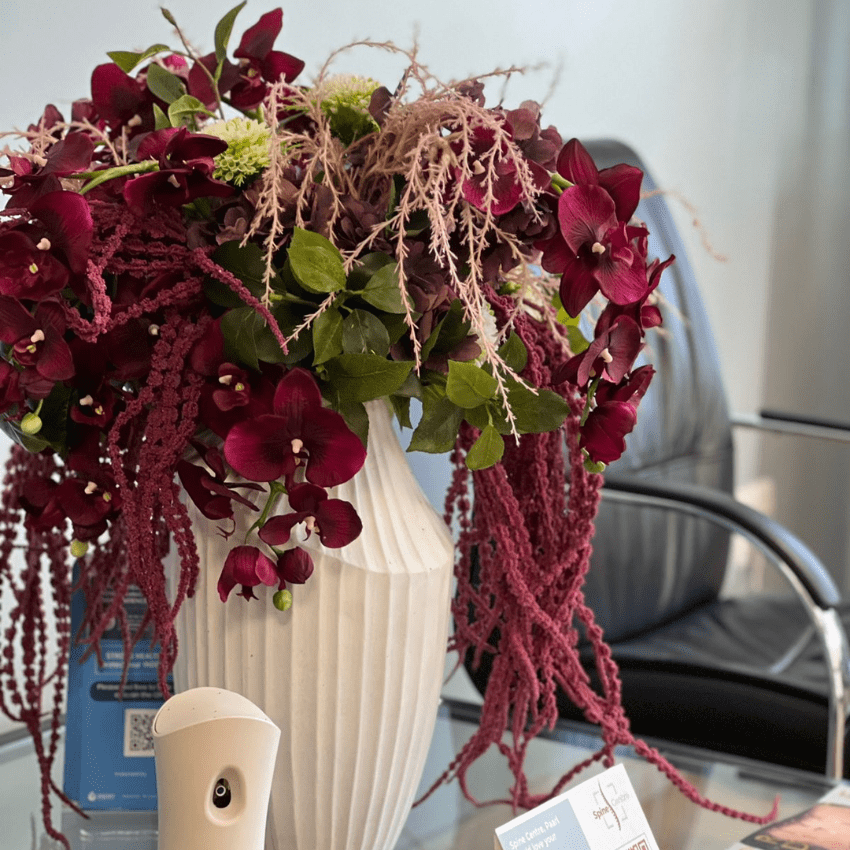
2) Shape and silhouette: less symmetry, more ease
Real arrangements don’t look like domes. They have:
- height differences
- gentle asymmetry
- one or two stems that extend naturally (“reach”)
A believable arrangement looks composed—but never rigid.
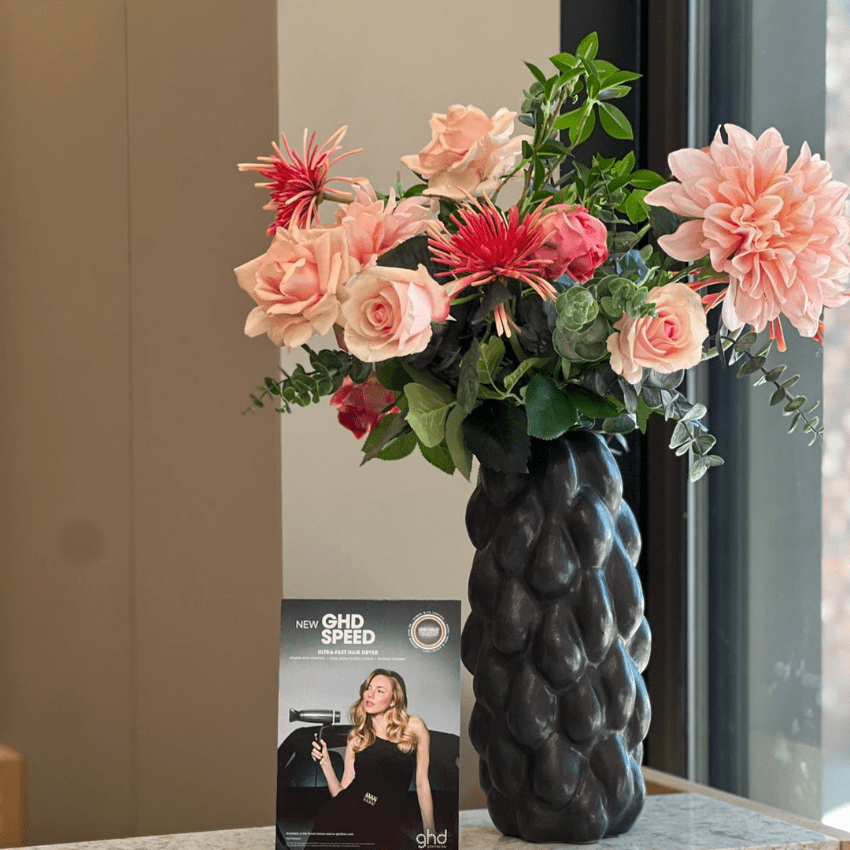
3) Negative space: the secret to looking expensive
One of the fastest ways to make faux florals look cheap is overfilling.
Premium styling looks like:
- breathing room between blooms
- a clear focal point
- fewer stems, better stems
This is quiet luxury in floral form: presence, not clutter.
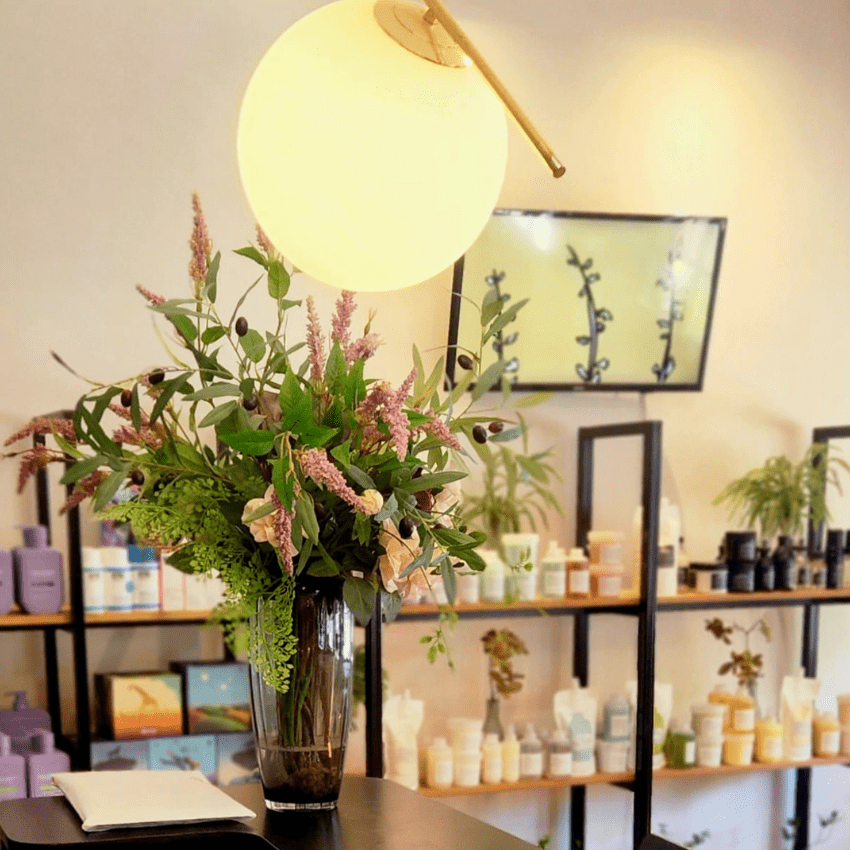
4) The vase matters more than people think
A beautiful arrangement in the wrong vessel can still read “fake.”
Choose containers that feel:
- weighty (ceramic, stone, glass, concrete)
- neutral and modern
- proportionate to the blooms
A good rule: the vase should look like it belongs in your space even without flowers.
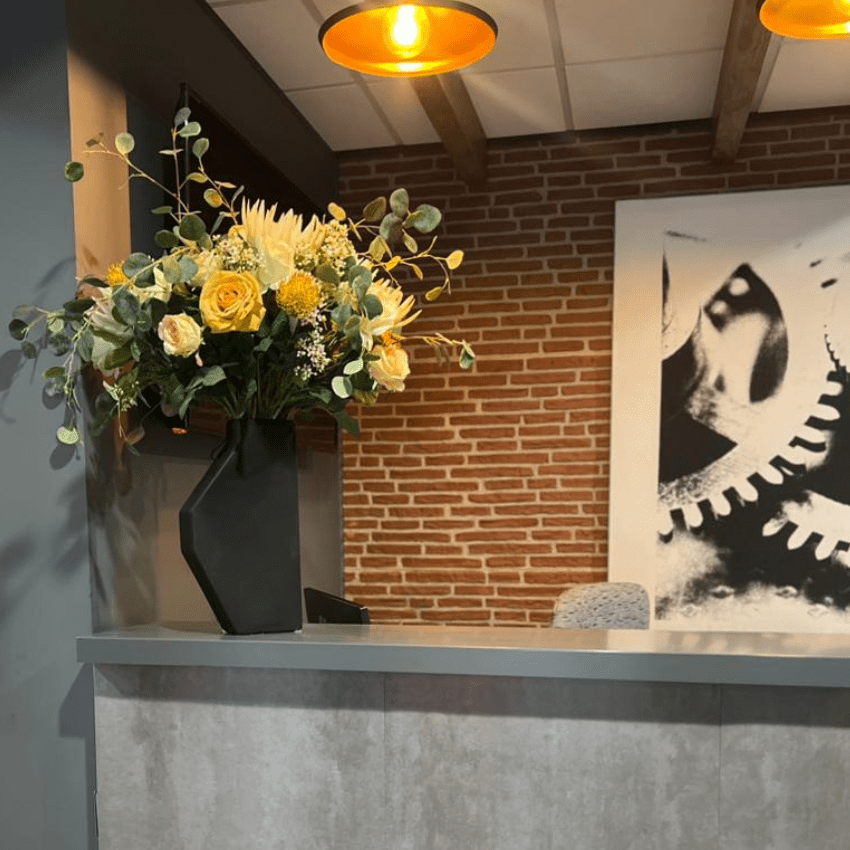
5) Placement: treat florals like a design anchor, not an accessory
Artificial florals look most believable when they’re placed where flowers naturally belong:
- entry console
- kitchen island (if uncluttered)
- dining table (kept simple)
- bedside table (small and calm)
- reception desk or boardroom credenza
They look least believable when they’re competing with messy surfaces, too many objects, or strong patterns.
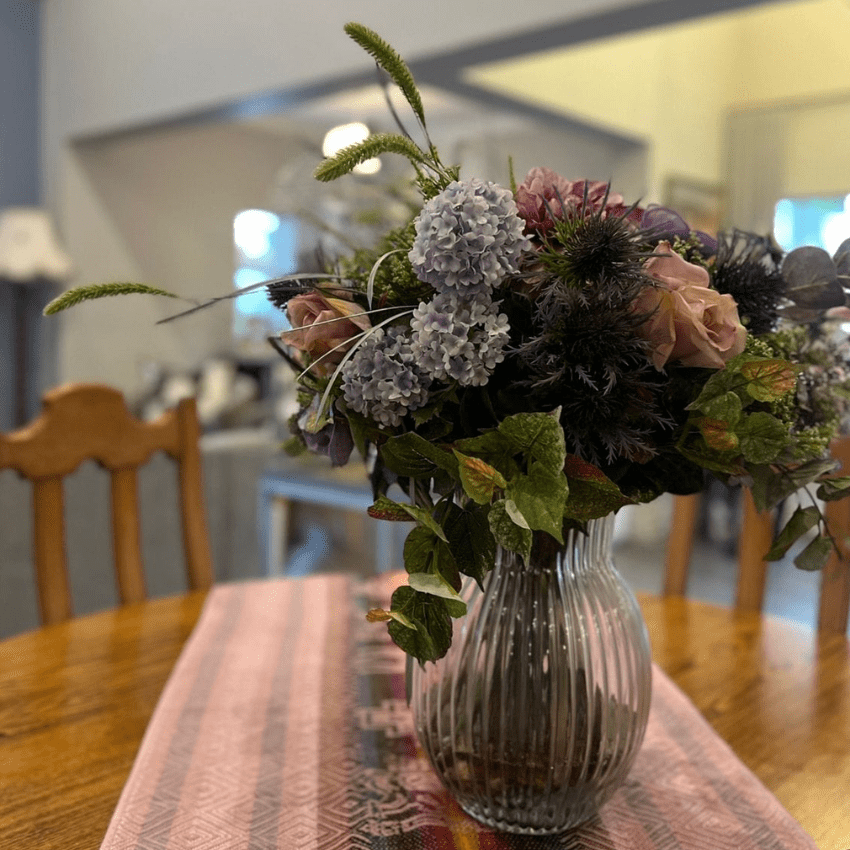
“Okay… but how do I style faux flowers so they don’t look fake?”
Here’s the simplest method that works almost every time:
The 5-step “real-looking” formula
- Pick a palette that belongs in your space
Neutrals, soft whites, greens, and muted tones usually read most natural. - Choose one hero bloom + supporting stems
One focal, not ten competing focal points. - Build height variation
A few stems higher, a few lower. Avoid perfect symmetry. - Leave breathing room
Stop before it feels “full.” Air = expensive. - Use a vessel with weight and simplicity
Let the container do half the work.
A SilkBlume rule: If it looks too “arranged,” soften it. The goal is perfectly imperfect, not perfectly packed.
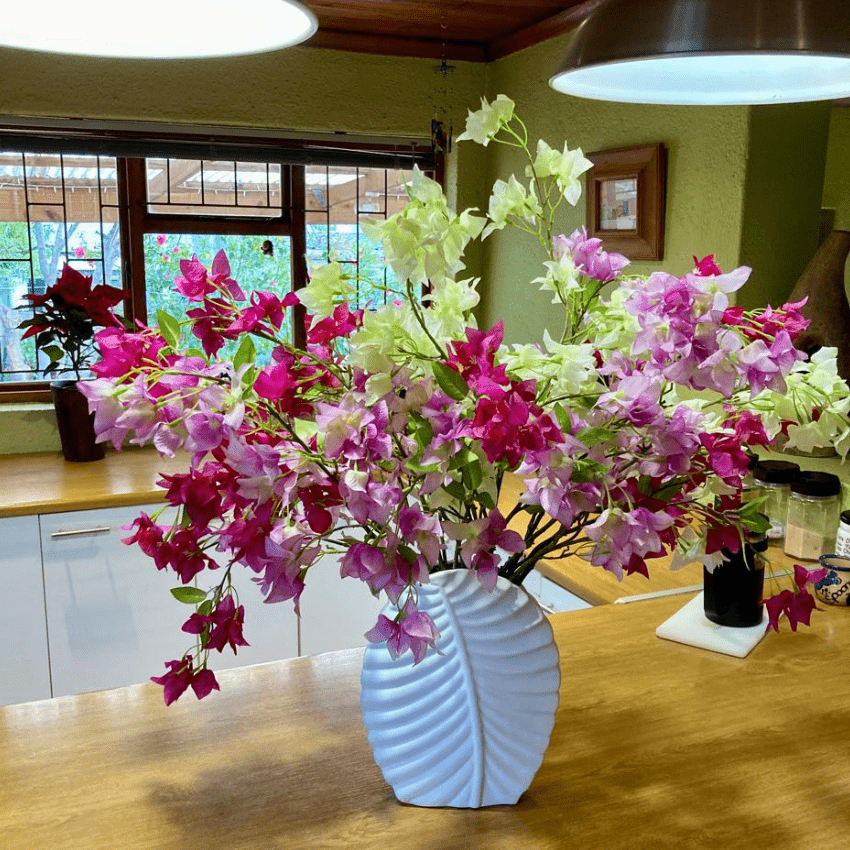
What if you want it to look real… and modern?
A quick guideline:
- If it looks like it belongs in a hotel lobby from 2006, simplify it.
- If it looks like a centerpiece for a formal event, edit it down.
- If it looks like one considered piece that finishes a room, you’re there.
SilkBlume’s approach is intentionally modern:
presence, not clutter.
calm, not noise.
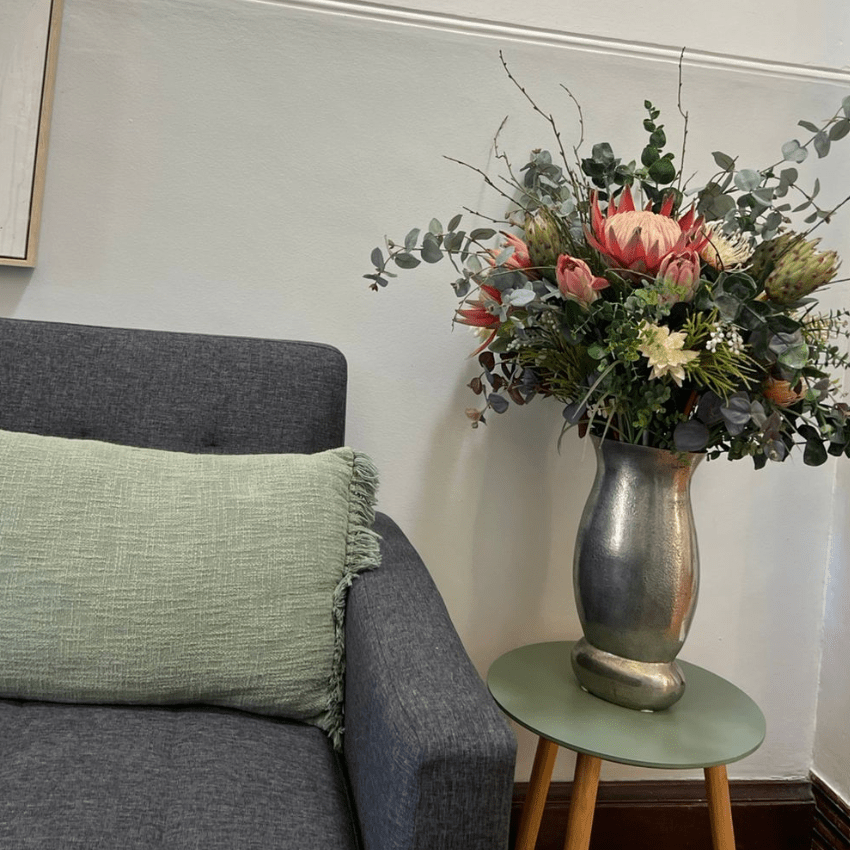
Real-space proof (and a quick note about the photos)
The most convincing proof that artificial flowers can look real doesn’t come from studio photos.
It comes from real environments—reception areas, boardrooms, client-facing spaces—where the arrangement has to hold up in normal lighting and still look natural at eye level.
Photo note: The images in this blog are from our real SilkBlume client spaces in Cape Town. If you’re reading this from the U.S., don’t worry—SilkBlume Atlanta is coming soon, and with it our flower arrangement subscription plus bespoke artificial plant installations for offices and hospitality spaces.
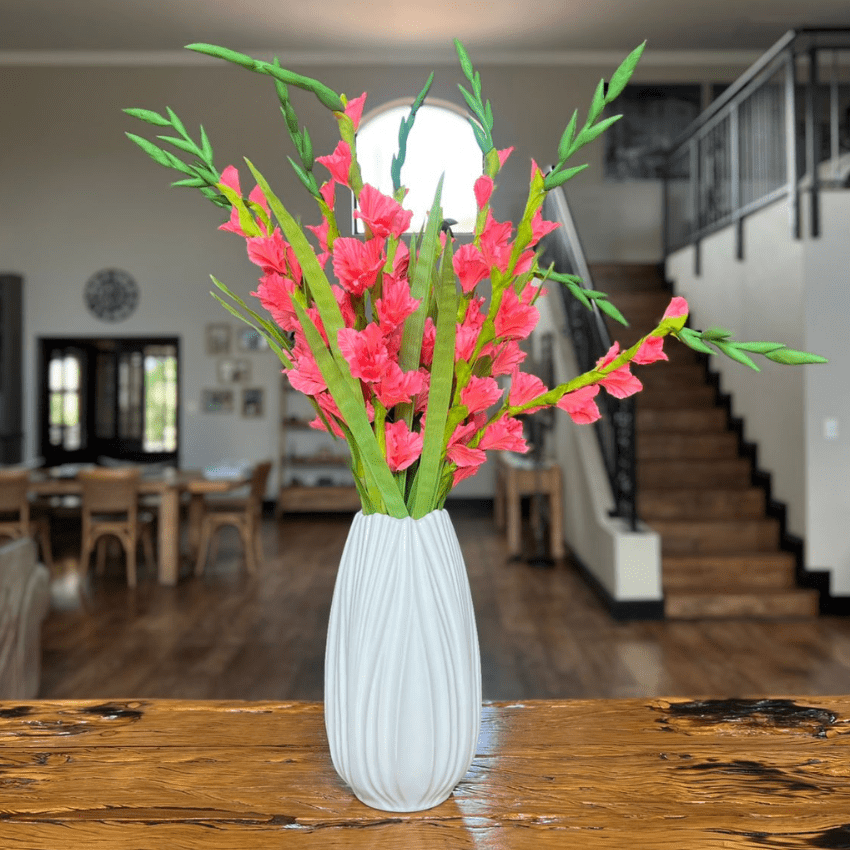
FAQ’s
Do artificial flowers look fake?
They can—but premium artificial flowers styled with variation, negative space, and a modern vessel can look remarkably real, especially when designed to read natural at eye level in real lighting.
How do you make fake flowers look real?
Use fewer, higher-quality stems; build height variation; avoid perfect symmetry; leave breathing room (negative space); and choose a modern, weighty vase that suits the room.
Are artificial flowers tacky?
Not when they’re styled with restraint. “Tacky” usually comes from overcrowding, shiny materials, and dated containers—not from the fact that they’re artificial.
Shop the look
If you love the idea of flowers that stay flawless without watering, wilting, or weekly replacement, explore SilkBlume’s curated artificial florals—chosen for natural realism and designed for calm, finished spaces.
Browse stems and arrangements that bring presence—without maintenance.

